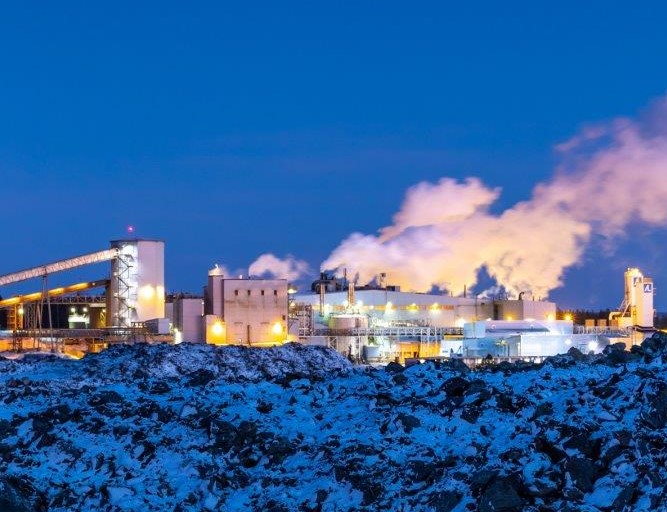
Kittila mine’s heat recovery helps reduce its energy needs and costs.
Since 2014, Kittila Mine has been successfully recycling the waste heat it recovers from its plants and processes to help reduce the mine’s overall energy needs and costs. Not only have these actions delivered savings to its bottom line, they have progressively reduced the mining complex’s carbon footprint.
Even though Kittila’s production has increased by 10 %, its total GHG emission intensity (tonnes of CO2 equivalent per tonne of ore processed) decreased by 2% over the past four years, going from 0.014 in 2014 to 0.013 in 2018. During the same period, Kittila’s energy savings and conservation efforts have continued to pay off.
How is Kittila Mine achieving such results? First, the mine uses recycled waste heat recovered from its oxygen plant to help heat parts of the underground mine. This year, after installing new heat exchangers, Kittila is also recycling heat recovered from its autoclave scrubber in the processing plant to heat buildings around the mine site, as well as the underground mine.
In 2015, the site automated its mine ventilation system to help reduce the amount of liquid propane gas it uses to heat the mine, as well as the amount of electricity it uses for underground heating and ventilation.
In 2018, with improved availability of the autoclave scrubbers, Kittila Mine was able to recycle even more heat throughout its processing systems, improving heat recovery and saving additional costs.
“These results encourage us to find even more ways of using waste heat to reduce energy demand,” says Kari Siirtola, Kittila’s Maintenance Superintendent. “We are in the process of developing a new energy strategy and already, we have a number of energy and heat recycling projects in the pipeline designed to deliver more savings in the future.”
Kari adds, “We encourage everybody to pitch in with ideas on how we can reduce energy consumption. For example, an employee at the water sulfate treatment plant suggested that it was not necessary to heat the thickeners at the plant and it would not affect its performance. This alone could result in an annual saving of 1,000 MWh.”