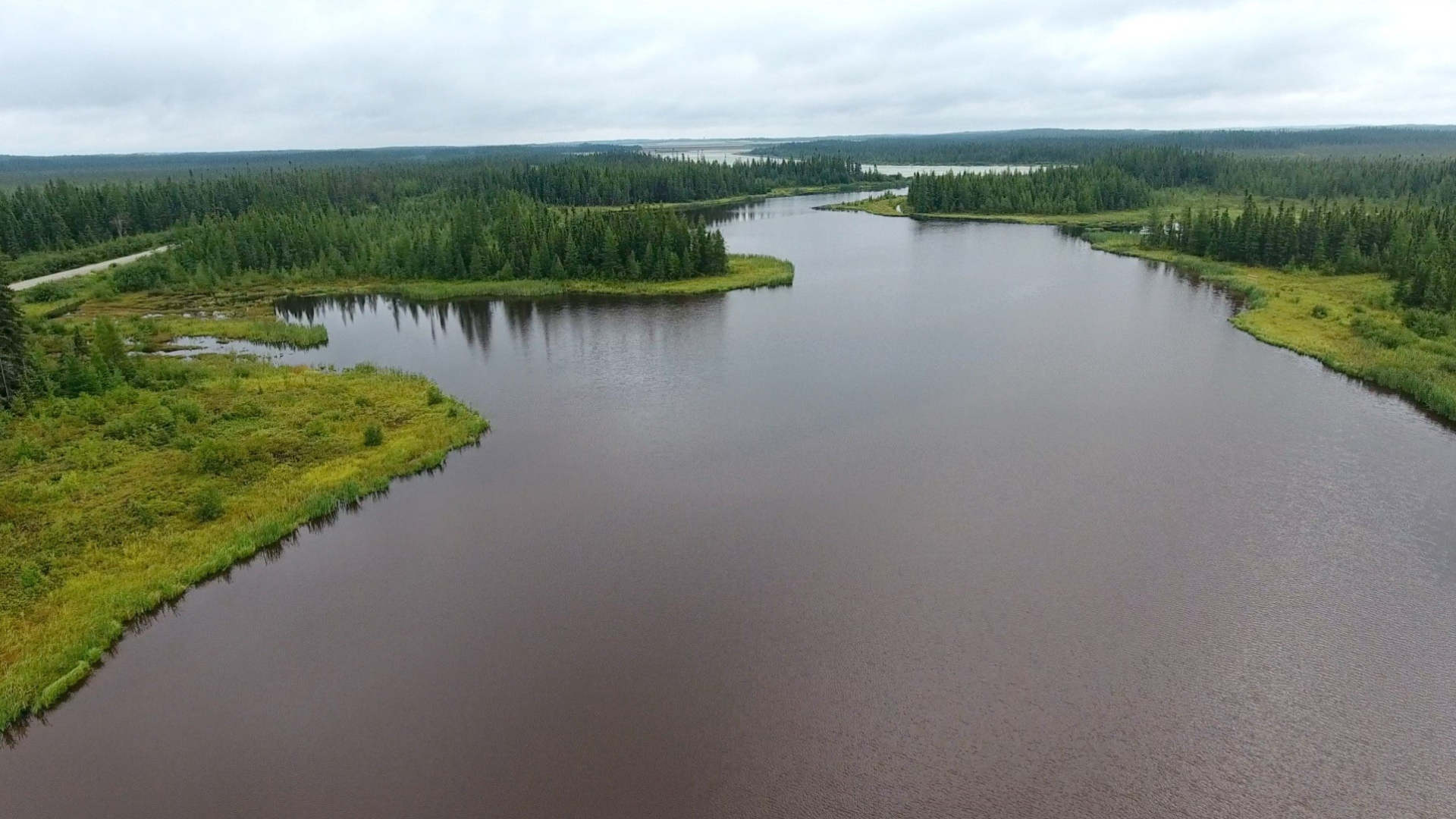
If you head fifteen kilometers east of Val-d’Or, in Abitibi-Témiscamingue in Quebec, you will find a newly created wetland, host to an array of fauna and a paradise for nature lovers. This wetland is the result of a novel approach to the rehabilitation of an abandoned mine site.
The Manitou site – a legacy of another time – is what remains of an old copper and zinc mine which ceased operations back in 1979 and had produced acid-generating tailings. The last mining rights owner filed for bankruptcy in 2003 leaving the Government of Quebec’s Ministry of Energy and Natural Resources (MERN) responsible for the contaminated site.
In 2006 Agnico Eagle entered into an agreement with the MERN to use the alkaline tailings produced by our Goldex mill to rehabilitate the Manitou tailings site.
The objective of the agreement was to use the sulphide-free and cyanide-free tailings produced by the Goldex mine to cover the acid-generating Manitou tailings. This would raise the water table above the contaminated materials and thereby prevent oxygen ingress into the Manitou tailings and stop acid generation.
The Manitou-Goldex project is a typical example of sustainable development. This innovative approach will also reduce the total site rehabilitation cost for the government.
Fast-forward to today, as the partnership reaches its 10-year anniversary, and the benefits are clear says Robert Lacroix, Project Engineer at MERN. "The contamination loading has been reduced significantly and the delta that was excavated has now returned to its natural state. I’ve even seen moose."
Nor are moose the only creatures to be seen. Species of birds and ducks that were never there before have taken up residence at the site, as have fish and even frogs, which are known to be very sensitive to their surroundings and will not thrive where contamination is present.
The biggest surprise of all however, was the arrival of trumpeter swans to the area – a species not previously native to the Abitibi region, and rarely even found in the province of Quebec as a whole. Today, the Manitou site is one of the few places you can go to see these magnificent birds and the site has become a popular meeting place for enthusiastic ornithologists, amateurs and professionals alike.
“The Manitou project is a demonstration that we can do things differently”, said Louise Grondin, Senior Vice-President Environment, Sustainable Development and People at Agnico Eagle. “What we did with Manitou, indeed what we do with all our projects, is to start thinking upstream of the project and even more importantly, to think about the project with a multi-disciplinary team.”
Watch the video to see the transformation and learn about the Manitou site!